
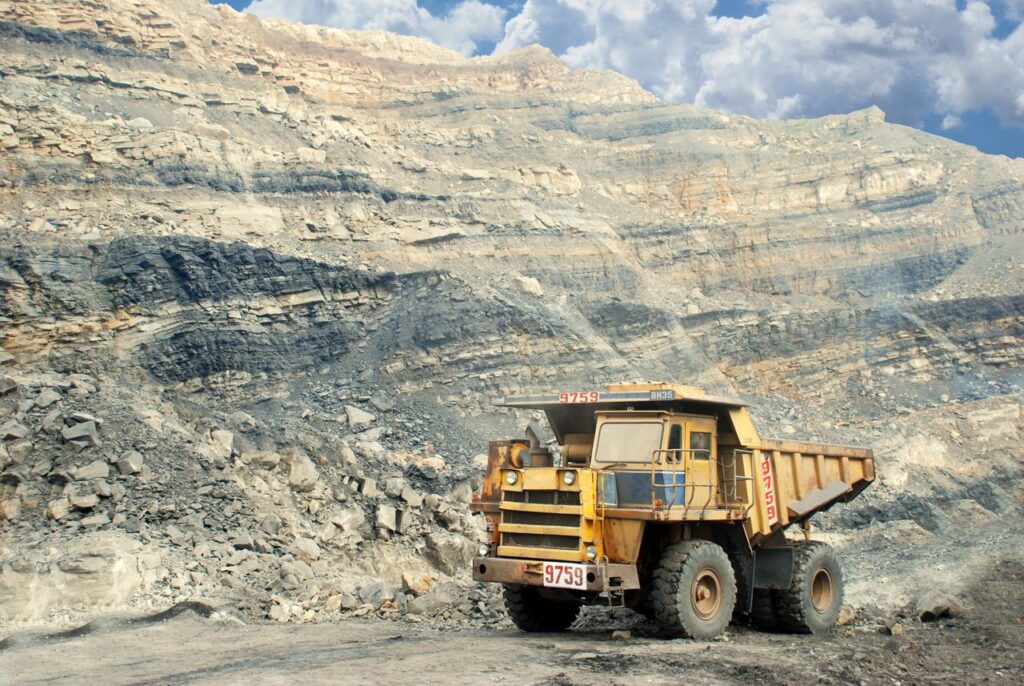
Zambia’s reputation as a mining jurisdiction is well established: Africa’s second-largest copper producer, and together with the DRC, holder of more than 70% of the world’s known cobalt reserves, the metal at the centre of the global battery and electric vehicle supply chain. What’s less well covered, and more useful if you’re actually considering putting capital into the sector, is what’s changed regulatorily this year and how the licensing system actually treats a foreign investor. This is a current briefing, not a repeat of the same headline statistics you’ve likely already seen.
The Numbers Right Now
Copper production edged up in the first half of 2026 to roughly 447,182 tonnes, a modest 0.45% increase on the same period the year before, according to Zambia’s Ministry of Mines and Minerals Development. The growth is uneven across operators. Konkola Copper Mines posted a 21.43% increase, attributed to recapitalisation and improved plant feed, while overall sector growth stayed slim.
That’s worth sitting with, because the government’s stated target of 3 million tonnes annually by 2031 is ambitious against current momentum, and Zambian industry commentators have publicly questioned whether the trajectory supports it. Treat the 2031 target as a policy goal the government is actively pursuing, not a figure to underwrite an investment thesis on its own.
What Changed in 2026: A Regulator Finding Its Feet
The 2024 Minerals Regulation Commission Act centralised mining regulatory functions under a new Mining Commission, and 2026 is the year that body actually started functioning. The inaugural Commission Board was appointed on 6 May 2026, and its Mining Licensing Committee has begun working through a backlog of outstanding licence applications.
Separately, geophysical survey coverage, the groundwork that identifies where mineral potential actually sits, jumped from 61.7% of the country in the first quarter of 2026 to 87.5% by late July. For investors, that matters practically: better survey coverage means better information is becoming available on where exploration is actually worth pursuing, and it signals the regulator is investing in the infrastructure that makes the sector easier to evaluate from the outside.
How Mining Rights Actually Work
Zambia’s licensing system is more layered than “get a permit and start digging,” and understanding the categories saves you from evaluating the wrong kind of opportunity.
- Exploration licences run for an initial 4 years, renewable for up to two further 3-year periods, capped at 10 years total. Small-scale exploration licences and gemstone licences (other than diamonds) are not renewable at all.
- Small-scale mining rights cover a minimum of 3 and up to 120 cadastre units.
- Large-scale mining rights cover 121 up to 7,485 cadastre units.
- Ownership rules differ by category. Small-scale exploration rights require a minimum 5% Zambian shareholding in the applying company. Large-scale mining, general exploration, mineral processing, and import/export permits carry no ownership restrictions at all, meaning 100% foreign ownership is permitted for the categories most relevant to serious institutional or individual investors.
- Applications are centralised. Regional Mining Cadastre offices exist, but every application is ultimately processed and awarded through the Cadastre in Lusaka.
The Incentives on Offer
Zambia’s mining incentive package is genuinely competitive by regional standards:
- Duty-free importation of capital equipment and utility vehicles
- 100% capital allowance on qualifying assets
- Input VAT claims for up to five years on pre-production exploration expenditure
- 100% loss offset against future profits, up from a previous 20% cap
- Stronger licence tenure protections and formal redress mechanisms under the 2024 Minerals Regulation Commission Act
Where the Real Risk Sits: Not the Rock, the Relationship
Everything above is public, verifiable regulatory information. It won’t stop you from losing money in Zambian mining, because the sector’s actual risk rarely sits in the geology or the tax code. It sits in who you’re dealing with: whether the rights being represented to you are genuinely held, whether the project owner has clean title, and whether the “opportunity” you’ve been introduced to has any relationship to a real, mandated seller.
Mining attracts brokers and intermediaries at every stage of the deal cycle, some credible, plenty not. Verifying a mining opportunity properly means confirming licence status directly against the Cadastre, understanding the ownership structure behind the project, and having a relationship with the actual rights holder rather than a chain of introductions three or four people removed from the source. That’s slow, relationship-dependent work, and it’s genuinely difficult to do from outside Zambia without a local presence you trust.
Where Wealth Bridge Facilitation Fits In
Wealth Bridge Facilitation works directly with mining project owners who have granted us formal mandates to assist with investor engagement and opportunity promotion. We facilitate introductions between investors and project owners, coordinate meetings and discussions, and support the relationship-building process as conversations move toward due diligence and, where appropriate, partnership.
We’re currently facilitating discussions on multiple active mining opportunities in Zambia. Consistent with standard practice in investment facilitation, and out of respect for parties still in active negotiation, we don’t publish specific project details, ownership stakes, or deal terms publicly. What we can do is have a direct conversation about your investment criteria, whether you’re an individual investor, an institution, or a mining company exploring expansion or joint venture opportunities in Zambia, and tell you honestly whether our current portfolio is a fit.
If you’re a broker or intermediary rather than a principal investor, we’re also open to that conversation, provided the relationship is transparent about who’s actually representing whom.
Ready to Look at Zambia’s Mining Sector Properly?
The regulatory picture above is a starting point, not a substitute for the due diligence any serious mining investment requires. If you want to go further than public data can take you, get in touch with Wealth Bridge Facilitation.
Connecting Opportunities. Unlocking Success.
Sources:
- Copper output rises to 447,181 in H1 2026 – Govt – Zambia: News Diggers!
- Copper production edges up in first half of 2026, Zambia Ministry official says – Zambia Monitor
- No, Zambia won’t produce 3 million tons of Copper annually by 2031 – Zambia: News Diggers!
- Vision 2030 Gets a Boost as Zambia’s Mining Output Edges Higher – Zambian Mining News
- Exploration Licence – Ministry of Mines and Minerals Development
- Mining Cadastre – Ministry of Mines and Minerals Development
- Zambia: Mining Licence Process Map – Transparency International Australia
- Zambia Mining Comparative Guide – Mondaq